The Professor

Science fiction, pulp and anything else that takes my fancy. I review everything I read.

1Q84

1Q84 - Jay Rubin, Philip Gabriel, Haruki Murakami “I don’t talk about the goat”. Much ado about nothing. Peak-Murakami for some, a test of patience for others, this is, however which way you spin it, too long and may well send you away wondering whether your time has been well spent. If an extended will-they, won’t-they romantic narrative with a sprinkling of oddness is your thing then read on. Otherwise be prepared for some low-key mirror-world shenanigans, evil religious cults, an obsession with breasts and lots of wheel-spinning.

“1Q84”, as Tengo observes, is a place where questions outnumbered answers and where “logic has no purpose”. This is a tried and trusted trick enabling authors to draw away the veil of boring old reality and, here, have ‘little people’ walking out of mouths, religious leaders levitating clocks, two moons and a miraculous impregnation all without care for explanation. I have no problem with this – I’m all for a bit of weirdness and I don’t require explanations from Carroll or Kafka or David Lynch – but Murakami’s oddness is very meh. Really wish he’d let rip and marooned Aomame and Tengo on Bizarroworld. What no dinosaurs? Bah!

Still, the oddness is irrelevant: “1Q84” is predominiently a hoary old love story. A will-they won’t-they narrative featuring two characters separated by 1000 pages of young adult prose. Thank God, Murakami does manage to bring their story to a passable close but this reader suspects he got up each morning, nudged his characters on a couple of thousand words without them actually doing much (Aomame spends much of Book 3 stuck in her flat watching clouds and reading Proust; Tengo reads to his comatose father) then went for one of his epic park runs. 1000 pages later people are falling over themselves to Tweet Murakami’s fortune-cookie sentences. Nice work if you can get it.

That 1000 pages is really the major drawback with “1Q84”. “The Wind-Up Bird Chronicle” had similar magical realist sequences and one character taking a break from the plot at the bottom of a well but it was at least shorter. “1Q84” overstays its welcome, not through its length but by the bagginess of the narrative. It starts very well with a vengeful widow and a publishing scam involving an oddly passive young girl but by Book 3 the pitiful Ushikawa is uncovering facts we already know while Aomame waits for Tengo to appear at the top of a slide and he gets high with a geriatic nurse. If this had some narrative momentum Aomame and Tengo would have been pursued up the “Alice In Wonderland” ladder at the end with at least some narrative obstacles placed in their path. Cult nuts Buzzcut and Ponytail might even have pursued them into “our” world, setting up, God help us, Book 4. As it is Tengo ghostwrites “Air Chrysalis” but doesn’t look at the moon and see its double until long after its published, Ushikawa’s Book 3 investigation pieces together information the reader is already aware of (one of many, many repetitions in this novel, right down to sentence level), we never find out what happened to Tengo’s married lover or divine the link between Tengo’s dying father and the crazy NHK licence fee collector persecuting Aomame and Ushikawa. Plus whither Fuka-Eri? Disappeared when no longer required. It’s all just stuff interspersing the endless interior monologues. The only conclusion you’re left with is that Murakami really hates television licence fee collectors.

You could argue Murakami is a poet of the mundane. He’s Nicholson Baker by way of Paul Auster. He zeroes in on the ordinary, on to characters’ breakfast choices, their periods looking at clouds or the moon from the top of a playground slide and then wakes you up with a burst of violence or surrealism or sex. Then again you could also argue your time would be better spent reading 1000 pages of mind-blowing sci-fi, or “A Dance To The Music Of Time” or, indeed, Proust which Aomame herself decides to dip into while sitting out the plot in her safe house. Your choice. The closest you’ll get to “1Q84” is the recent return of “Twin Peaks” which also, by God, had its longeurs (Dougie…) and featured dopplegangers and eggs flying around the room with spirits inside them but got by on the immense goodwill of its niche audience who collectively decide to go along for the ride. That’s what you do when you read Murakami; you surrender to the ride. It’s just that in the case of “1Q84” it’s a counter-productively long ride.

Redemption Ark

Redemption Ark - Alastair Reynolds “Kill me, please. Kill me now.” The ‘Revelation Space’ saga continues and if you’re in this far the news is good: ‘Redemption Ark’ more than satisfactorily continues proceedings because Reynolds, God bless him, doesn’t faff about. The Inhibitors are in play from the start and they’re merrily obliterating whole planetoids to fuel their dastardly plans.

A lot happens in this 650 page novel but the basic goals boil down to either get the hell out of Dodge or fire pea-shooters at the solar system-destroying oppressors. No spoilers but proceedings bear some similarities to Greg Bear’s “Forge Of God/Anvil Of Stars” duology with Reynolds providing no easy outs against his fearsome oppressors. The prologue builds dread very nicely. In fact bravo to whoever came up with the tag line on the cover (“The Inhibitors have returned. Don’t make any long term plans…”); if that doesn’t get your blood flowing you’re in the wrong section of Foyles. Anyway, previously on ‘Revelation Space’ the arrogant Dan Sylveste went searching for the reason behind an alien extinction event and – thanks Dan – tripped a galactic early-warning system alerting the dread Inhibitors to the presence of intelligent life in the system. The Inhibitors discretely leave such puzzle boxes all over the galaxy and if you manage to open one up they come a-callin’ and you don’t want that.

Alerted to big scary objects suddenly entering the Delta Pavonis system are the chain-smoking Ilia Volyova and ex-assassin Ana Khouri (still hung up on her long lost husband) with their Melding Plague-ridden Captain and now sentient Hell-Class weapons. I love that this series allows me to write sentences like that. Together they recruit doomsayer Thorn to help evacuate Resurgem (he requests a deep dive into a gas giant to see for himself what the Inhibitors are up to; an excursion that seems needlessly reckless but allows Reynolds to field a potential narrative exit strategy). In strand two defector Nevil ‘Butcher of Tharsis’ Clavain (once of the Coaliation for Neural Purity but now filled with the medichines of the Conjoiners) is toured round a Conjoiner evacuation fleet secreted within a hollowed out asteroid, asked to steal back those Hell-class weapons but instead does a bunk (during which his slippery ex-soldier tour guide Skade suffers an, um, nasty cut) and defects back to the Demarchists to get the word out to the rest of humanity. This series is full of blokes acting impulsively and women thinking things through. Skade, with inertial dampening technology (something Star Trek and Doctor Who – c.f. Bessie’s minimum intertia superdrive – played with but here gets a splash more versimilitude; I loved the effect it has on eyeballs) gives chase, Clavain hooks up with a motley crew to steal a lighthugger and then pursues Skade herself as she goes after the weapons setting up a confrontation with Volyova (who finds out what it’s like getting in the way of one of the Hell-Class weapons) and Khouri (whose relationship with Thorn gets gently advanced). Around all this is talk of the mysterious “Exordium” project which seems to be receiving garbled messages from the future, grub technology which wipes people out of the timeline, and much else. It’s all absolutely delicious.

The Inhibitors, of course, present a classic problem to Reynolds but one which, being well-versed in the genre, he nimbly outmaneuvres. They’re just too damn powerful. Rocking up and immedately obliterating all intelligent life doesn’t give one much wriggle room for a story so Reynolds is careful to make the Inhibitors slightly on the skids (for example, actually allowing the Amarantin to become interstellar space-farers) and embarking on an actual process of planetary destruction that gives someone like Volyova time to ping off a weapon or two. There’s also that grub technology erasing people from time which hints at a pretty big reset switch if Reynolds wants it, although with work of this intelligence it would be a surprise if he went all Steven Moffat. The novel ends on fireworks, a wonderful planetfall and a moving cliffhanger which still left this reader wondering how on Resurgem this is all going to be wrapped up.

What can I say? I love this stuff. More tightly plotted and less wayward than Iain M Banks’ later novels (say “Matter” and “Surface Detail”), I feel. I wish I was fourteen again and discovering ‘Revelation Space’ for the first time. It’s a good friend, this novel; I had it on the go for about a month and always returned to it gratefully and eager for my next mind-bending fix. Must ration the Reynolds material though; really don’t want to have to white-knuckle it through the wastelands between each new fix. Anyway, I’ve said enough. Highly recommended but newbies should start at the beginning. “You have spiders on your tail.”

The Girl Who Takes an Eye for an Eye

The Girl Who Takes an Eye for an Eye - David Lagercrantz, George Goulding “Something feels not quite right.” Lisbeth Salander does Porridge and an unkind reviewer might suggest the reader does too. Scandi-Noir’s most famous odd couple get ill-served here in a seen-it-all-before job from David Lagercrantz. One senses a lot of this will be “re-imagined” (trans: jettisoned) for any upcoming Foy adaptation. “The Night Of” this ain’t.

There are two stories going on here. Girl magnet journo Mikael Blomkvist (railing against Millennium going digital but doing all his ‘tec work via Google) once again pursues a shadowy cabal of ne’er do wells from punk hacker Salander’s past while Lisbeth herself – unjustly banged up, natch – goes out to bat for a withdrawn type in the cell opposite. There are fiendish experiments on twins, a psychologist “accidentally” shot during an elk hunt, some “Stockholm People” of Project 9, the return of the diabetes-raddled Plague of Hacker Republic and it turns out Salander is basically the adult version of Eleven from “Stranger Things” or Olivia ‘Cortexiphan’ Dunham from “Fringe” or Gibson Praise from “The X Files” or any of the kids from “Codename Icarus” etc, etc. Faria has evil brothers, Daniel has an evil, guitar-smashing, step-father, prison thug Benito is so evil a country wide alert is put out on her. Even the meagre shades of grey present in, say, “I Am Pilgrim” are absent here. There's not much here that hasn't been done better, many times before, elsewhere.

The suspicion is that this has been written to order rather than to the beat of any inner drum. It’s pure franchise fodder, bog standard airport reading, and skewing decidedly towards the not-worth-critiquing because it never seriously engages with its material; the oppressive family issues facing poor old Faria are so off the peg, sub-Homeland, material it’s cartoonish. The Millennium novels have always liked to pretend they are basically “Newsnight with Siouxsie Sioux” but the veneer of political intent and social realism have never quite managed to hide their reliance on good old-fashioned pulp elements. “Spider’s Web” looked like Lagercrantz had the chops to take Salander into more thrilling, pulpy waters but “Eye” noticeably lacks what Rider Haggard called “the Grip”. There are also a hell of a lot of dead sentences: “It’s enough to make your head spin”, “Whatever would she think of next?”, “Something strange is going on”, “Something feels not quite right”, “Stop. Police. Nobody move!” Tension is created by brutal interruptions in the prose. Plotting (getting Salander to a networked computer inside a prison) is painful. The sadism remains dialled down but any political intent is now lip service. Lisbeth deserves more.

This is the first Millennium novel written without a sense of mission. The original trilogy were products of a politicised mind while Lagercrantz’ first continuation novel had to prove the franchise had legs beyond its creator. This? It’s just product. Even Horowitz’s Bond spin-off had the newsworthy hook of some original Fleming material. This series needs a rocket up its backside. Give it to Val McDiarmid or Christa Faust. Norstedts better get their act together or they’ll lose the public’s interest in one of the best characters of the last 10 years. Fingers crossed Claire Foy can work some magic.

Pushing Ice

Pushing Ice - Alastair Reynolds “There’s something out there that doesn’t welcome the curious. You’re going to meet it.” The novel Gentry Lee’s “Rama II” desperately wishes it could be. Janus, one of the moons of Saturn, suddenly decides to say sayonara to the solar system and what follows ranges from two friends falling out to the rise and fall of a galaxy-spanning human empire. In this readers opinion, if you’re after a 500-page wodge of stand-alone SF this is a complete no-brainer.

In hot pursuit of Janus is the only ship in the vicinity, the Rockhopper, which ordinarily cannibilises comets. Handy, that; there’s about 150 people and rather a lot of equipment on board. Other than the flash-forward to the eventual human empire and the events involving Janus, the first 100 pages or so of “Pushing Ice” are, oh dear, engineering-heavy and focus on procedural disagreements between Captain Bella Lind and her number one/BFF Sveltana Barseghian. This, however, is worth sticking with because it has serious ramifications; some people just love to hold a grudge. Note also that while Reynolds’ ideas are huge he is, crucially, a very good story-teller. You’re never more than a few pages away from some new and toothsome development.

There are eccentricities. Would you really send a guy who has spent the last decade in a state of nervous collapse in to meet aliens? Would your next move really be to send in a cryogenically frozen corpse? Fortunately, Reynolds has enough good will in the tank for us to roll with developments like these. The start of chapter 22 recalls Gort’s first appearance in “The Day The Earth Stood Still” while building a life on a mysterious alien machine chimes with those Gentry Lee Rama spin-offs (note for Rama afficiandos/masochists: Reynolds is a far better writer than Lee). Many other small moments recall other SF tropes such that at times it feels like Reynolds is almost honouring the genre, but he never merely pastiches it. Major questions are resolved with 100 pages of the novel to go, replaced with further mysteries involving the dubious Musk Dogs and their “gristleship”, the enigmatic Fountainheads and a black cube with Da Vinci’s Vitruvian Man embossed on it. There’s a blockbuster finale involving a hole being punched in “the Structure” and a filmic zoom out revealing the true scale of what our heroes have been enmeshed in. It’s all delicious stuff.

I turned to “Pushing Ice” almost at random after finishing “Chasm City” but wanting another immediate, non-Revelation Space Universe, fix of Reynolds work and boy, did I luck out. Being set closer to our time I found I could zoom through this at a quicker rate, frankly impatient to gobble it down and find out how the hell it was all going to tie together. Tie together, it does and there are enough lingering questions to substantiate Reynolds’ talk of a sequel. I confess this stuff really rings my bell and non-SF addicts might give a more objective view of the likes of “Pushing Ice” but including Reynolds’ excellent Doctor Who novel “Harvest Of Time” I’ve now read four of his novels and I'm already boring everyone to death by recommending him every chance I get.

Chasm City

Chasm City - Alastair Reynolds “I had chased a man across more than fifteen light-years, into a city which had become a sick perversion of itself.” Genetically engineered anthro-pigs and snakes the size of trains. A flotilla of five interstellar colony ships…tailed by a sixth “ghost ship”. If such material doesn’t get your juices flowing then you’re in the wrong place. If it does then get thee to Waterstones because there’s “Chasm City” and a whole shelf of Reynolds’ Dream Fuel waiting to be devoured.

Freelance mercenary Tom Hiddleston…er, Tanner Mirabel…is on a mission to bump off one Argent Reivich, a rich kid who murdered his beloved (while, um, giant snake hunting) and his furious rampage of revenge allows Reynolds to sketch and colour in more areas of his moreish “Revelation Space” universe. There are lots of universes out there in SF-land but there’s something about this one that has really got under my skin. Maybe it’s the whiff of verisimilitude or Reynolds habit of casually unleashing scenes like the opening space lift episode which beg to be rendered on an IMAX screen. Following Mirabel as he homes in on his quarry would be fine – it’s the sort of McGuffin that drove Iain M. Banks “Consider Phlebus” – but we also get involved in the mystery behind one Sky Haussmann’s obviously successful leadership in setting up some original human colonies in the first place for which he was thanked by being…crucified. What the hell happened? Is everyone a critic? What connects that piece of bloody history with the use of Dream Fuel and experientials with a maggot logo on them? Everything about Haussmann’s story is rivetting particularly when he starts going incrementally off his rocker.

Once Mirabel is free of the Ice Mendicants and wandering slack-jawed around Chasm City itself (Cairo times ten, in my head) there is much to-ing and fro-ing between Zebra, Pransky, Chanterelle, Madame Dominika, the Mixmasters and their dodgier competitors the Black Geneticists all interspersed with (narratively legitimised) flashbacks to Sky Haussmann going all Game Of Thrones-y. Central to all of this is the very interesting “Melding Plague”, which cropped up in “Revelation Space” but here affects the whole – and I do mean the whole – of Chasm City. It’s a brilliant idea, one which makes you go “of course!” and certainly gives one pause for thought if you’re pro-nanotechnology. As with “Revelation Space” Reynolds remembers to tie his separate narrative threads together by novel end, rewarding the reader for sticking with him through 600 pages of sci-fi but if you’ve got this far it’s a safe bet that, like me, you’re in for the long haul. Just stack ‘em up, I say.

If pushed I’d say the clearer narrative thread and the Haussmann material edges “Chasm City” past “Revelation Space” for me, although “Revelation Space” is arguably technically more accomplished. That novel inducted you into the world-building so in “Chasm” a bit of mystery (Hausmann’s backstory) and a classic plot line (the mission is a murder) allows us to settle in and have a wander. For those of us reading these novels in publication order there are non-essential nods to Calvin Sylveste’s disasterous neuroscanning project, the Monument to the Eighty, Dan Sylveste’s encounter with the Shrouders etc. and much more about the murderous game the post-mortals play to stave off boredom. Me, I’d be happy to stave off boredom with a set of these books and a cool drink on a desert island. Preferably far from any outbreak of the Melding Plague. “Life’s what you make it.”

Blood Music (Ibooks Science Fiction Classics)

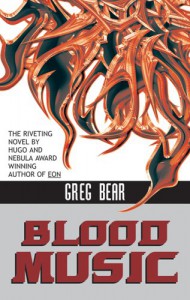
Blood Music (Ibooks Science Fiction Classics) - Greg Bear "I’m not sure there’s any way to fight an intelligent plague". Fun with DNA which, as usual, can do anything. Here it provides a good excuse for a couple of picked-up-and-abandoned narrative directions but also an at times bravura depiction of self-aware biomatter letting rip.

Schlubby (but strangely computer literate; he’s in the wrong job) biotechnologist Vergil Ulam earns the derison of the reader by gene therap-ing some lymphocytes, falling out with his bosses, then doing a runner with the assets shoved down his blood stream. There's the high concept right there and this reader spent the first 100 pages of “Blood Music” desiring Mr Ulam be kicked from here to kingdom come. Virgil does the whole hideous transformation thing and info-dumps in a condominium while gormless chum Edward goes "no way!". The USP of the novel - and what probably won Bear the Hugo back in the day - is that chromosome introns are actually a sort of distributed computer program which, when transcribed (Bear riffs some molecular biology to sell this) merrily starts dismantling, then rebuilding human biomatter and allowing Bear to let rip with depictions of conscious cellular and sub-cellular material. So if you’ve ever wondered what it might be like to be an erythrocyte bobbing along a capillary here’s your chance. Bear obviously thinks it would be "awesome" whereas this pallid Brit felt it would be a quick way to say sayonara to sanity so the rhapsodies didn't quite work on me. I wanted more horror. Bear isn’t Woody Allen either so there’s no amusing dialogue from a neurotic spermatazoa, worse luck. It’s also a pity that any British schoolboy who’d seen the Doctor Who story “The Invisible Enemy” in the seventies would already have seen a sentient virus doing the rounds and even more of a pity that decades later the end result of Bear’s ruminations on the perils of fiddling with DNA would be some universally reviled Star Trek episodes, the Red Dwarf curry monster and Prince Charles getting the heebie-jeebies. Once the cells go fully sentient - and, um, conversant - it goes a bit silly on the hive-mind voiceover front (“Contact has been made…”) and Bear’s not one for providing toothsome characters to buoy us through the weirder bits but there are some fancy word pictures.

I enjoyed Bear's end of the world novels Forge Of God and Anvil Of Stars but I suspect what “Blood Music” needed was a more avant garde novelist at the wheel, someone with real literary heft to take this out of the quotidian and into the artsy. Then again this is exactly the sort of SF premise that Ian McEwan or Kazuo Ishiguro would get the horn for these days and end up larding it with high-seriousness, sentimentality and silting up the Booker Prize list so maybe we dodged a bullet. Christopher Priest might have made an interesting fist of it though, although maybe skewing more towards the memory and identity end of things. Angela "The Bloody Chamber"/"Doctor Hoffman" Carter would have done something really interesting, obviously. Unfortunately, despite the poetry of the title, Bear provides the meat and potatoes but no flourishes. Grey goo indeed.

Revelation Space

Revelation Space - Alastair Reynolds "Your tenancy here has expired." If you've ever looked up at the night sky and asked yourself "Where the hell is everybody?" this novel proposes a toothsome solution. "Revelation Space" lacks the sense of mischief that something like Iain M. Banks “Excession” has but has just as strong a love of Big Ideas, here given the added kick of being - one feels, due to Reynolds’ scientific background - rather close to the actually possible; if Dawn Wars and Inhibitors squishing uppity child species are your bag. Compared to other hard SF efforts like, say, “Seveneves” or “Luna” this definitely delights in more narrative pyrotechnics right to the end and rationalises more dizzying ideas but there is a sense Reynolds is firmly on the reader’s side, he isn’t more in love with his ideas than the ride. Plus he sticks the landing. Thank the maker.

A cursory glance at the Wikipedia page for “Revelation Space” gives you some (spoilery) indication of the sort of world-building going on here - there's factions vying for terraforming control of Resurgam, ancient civilisations, star-destroying weaponry infected with viruses, cloned personalities, ectoptics, buried cities, Pattern Jugglers, the Shrouders, the Event - but this heady stuff is all accompanied by a solid (and very well plotted) mystery-box narrative which turns out to be a walkthrough of one of the proposed solutions to...well, I'm sure other reviewers will blow the surprise. Mercifully, he builds in subtle recaps as he goes along and the lore is delicious enough to keep you hooked. I felt Sylveste’s eventual descent into Cerberus had more than a little feel of “Rendezvous With Rama” to it and kudos for Khouri and Pascale deciding to just get pissed when they’re realise they’re on a one-way trip to the neutron star Hades. There is humour and any sex or violence is painted in abstract strokes and, frankly, comes across as more mature for it. The novel ends in the SF version of a battering ram on a mysterious castle, Reynolds throwing in a bit of horror in a surgical unit and a tsunami of rats and with various characters asking each other "is he on our side?" but since all the throw-forwards are actually answered and the narrative revolves around a genuine, and interesting, scientific question any first novel birthing pangs are forgiveable. Mostly, this puts me in the mood for more from this incredible universe and from the groaning Alastair Reynolds shelf in Foyles.

A Question of Upbringing

A Question of Upbringing - Anthony Powell “Just a whim of mine regarding elephants.” If you read narrator Nick Jenkins’ thoughts on who might have scrawled the picture of Widmerpool on the wall of the toilet at La Grenadière (along with who might have added “certain extraneous details”) without a smile on your face, without luxuriating in the language, it’s fair to say this won’t be the epic for you. Anthony Powell, on the basis of “A Question Of Upbringing”, has a very delicate sense of humour - he’s barely touching the strings - but if you can tune your receiver to his frequency the rewards are there. Powell writes like an angel and he definitely has a comic eye.

The stroke of genius is the creation of Widmerpool, here seen moving from school into the workplace via a sojourn in France with Jenkins but already painfully recognisable as a real English “type”. I am convinced, in 2017, England is Planet Widmerpool. I suppose the thrust of “A Question Of Upbringing” is a dissection of class war power struggles although since this is the English upper middle class in the early twentieth century this is hard-wired in rather than explicit. It is therefore significant that, say, Widmerpool has to pay to stay at La Grenadière, goes straight to work rather than to University and Oxford don Sillery brings Mark Members and Quiggin to heel by observing they live very close to each other, “practically in the same street”. There are lots of these very English little moments scattered throughout the prose to the extent I’m beginning to see why “Dance” maybe doesn’t travel well. You have to be steeped in this stuff to pick up on it.

After Eton and pre-Uni Jenkins kills time at scallywag Peter Templar’s family house, fixating on the unattainable sister Jean (trotting about the place in a tennis skirt) and observing an incident in which on-the-make businessman Sunny Farebrother’s patented collar straightener – which goes wrong – is used to score points off a hapless race-car driver, Stripling. “Dance” is all about this sort of casual point scoring and oneupmanship and while you might ask yourself at the time why tiny incidents such as this are the subject of attention, Jenkins reports such events later to other characters and their responses are always characterful. You particularly start wanting to know what Widmerpool’s reactions will be. Jenkins’ subsequent French sojourn before Uni is complicated by – ta-daa! – Widmerpool’s surprise appearance (chance meetings being a feature of “Dance”, I believe) and he gets to finesse his diplomatic skills by pacifying two battling Scandinavians Orn and Lundquist, while Jenkins makes a very English hash of his first declaration of love. Once in Oxford we witness the scheming don Sillery (in “sack-like clothes and Turkish slippers”) networking furiously and securing Stringham’s future in the city while a car ride with Templar’s dodgy new chums Bob Dupont and Jimmy Brent ruptures the friendship between Stringham and Templar. Throughout all this Jenkins is the relatively passive observer/artist, Templar the alpha-male, Stringham the bruised romantic trying to find a place in the world and Widmerpool the awkward, self-important kid at school obsessed with gaining power. As schoolmaster Le Bas says “It takes all sorts to make a world.”

Wodehouse without the jokes? Wrong. Read Lundquist’s departure from the tennis court and tell me Powell isn’t a comic writer. Plus Uncle Giles and Sillery both deserve their own novels. Wodehouse, bless him, wrote souffles; Powell is main course material. No knock-out female characters yet, but Gypsy Jones and Pamela Flitton are on their way. This is good stuff. It all bodes well.

Anvil of Stars

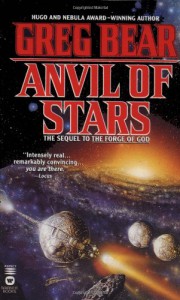
Anvil of Stars - Greg Bear "All intelligences responsible for or associated with the manufacture of self-replicating and destructive devices will be destroyed." Started this, put it aside for a while, but couldn't get the premise out of my head so I’m glad to have finished it. This continues on from Bear's very enjoyable "The Forge Of God" ("Independence Day" with a brain) in unexpected and curious directions. We follow a group of volunteer twenty-somethings - merrily coupling without regard for convention - who are tasked with exacting vengeance on the murderers of Earth, a bunch of fiends who appear to be able to turn matter into anti-matter and cloak entire planets. Group dynamics are fragile, the current leader is flakey, the first drill is a disaster and their robot guardians are refusing to nanny them anymore. They find a likely looking system for destruction, start dropping bombs and then... well, that's all part one. What I like about this and "Forge" is that Bear does not screw around. There's no piddling about before Big Stuff happens, 100 pages in and you're reeling from the events and ideas in play. It sticks the landing too, although in my opinion this rag-tag group of avenging angels are very lucky their snake-like chums the “Brothers” find what they do in the eventual wreckage. There’s a delicious moral dubiousness hanging over all this and plenty of mystery as to who is being manipulated. True, nut-ball Rosa drove me up the wall and reams of xenobiology does nothing for me (a similar drawback I found in Stephen Baxter’s “Proxima”) but Bear is careful to leaven these aspects with other characters rolling their eyes and the like. There are a couple of magic wands being waved around - “noach” or “no-channel tranmissions” which enables uninterceptable, instantaneous communication within a certain range and “momerath” which is basically supermaths for all those pesky celestial mechanics that need working out but the science throughout all sounds disturbingly convincing. One suspects an audience with Mr Bear would be a dizzying experience. Very eager now to explore his other work which, by the blurbs, sound right up my street.

I Am Pilgrim: A Thriller

I Am Pilgrim: A Thriller - Terry Hayes “I pulled the Beretta out of my waistband and crept silently towards the door.” There's a certain goodwill one has for an old hand Hollywood scriptwriter whose first novel is a gargantuan slab of pulp fun but when that scriptwriter lives in Switzerland and thanks his lawyer in the acknowledgements you're not inclined to cut him as much slack as some young turk emerging blinking into the light. "I Am Pilgrim" is blatantly "The Satan Bug" meets "The Day Of The Jackal" and according to the cover blurb the only thriller you’ll need to read this year. Well five hundred pages in and we have false walls pivotting upwards in a house built by Nazis and suddenly the beating pulp heart of this novel is laid bare. “I Am Pilgrim” is a great big slice of cake, perfect beach fodder (your boss will read this beside the pool and press it on you when he returns) and a slum dunk for relatives who like a good yarn. My mother lapped it up. Yet for all it’s talk of Echelon and gene splicing and characters directly impacted by 9/11 its narrative and ideas are as old as the hills - this is a 700 page episode of "The Man From UNCLE" - and afterwards you’re not left with much to say beyond “golly, that was gripping” and “I certainly hope no one gets any bright ideas from all this.” The USP is how scary the old-school premise seems when it’s dressed up in modern clothes but frankly “Homeland” does that. “Spooks” used a similar premise as “I Am Pilgrim” for a whole season arc and when the cover story of a nuclear trigger is employed you suddenly get flashbacks to season whatever of "24". Plus Matt Helm would have wrapped this yarn up in 150 pages max. Kudos for the trip into the White House but, wistfully, the President is more Jed Bartlett than Donald Trump and the super dooper computer “Echelon” is depicted as jolly useful and benevolent despite the real-world NSA being far more malevolent and, unfortunately for the NHS, cack-handed. I wish something more than lip service had been paid to the moral complexities at work here. Hayes apparently has a couple of sequels lined up, natch, but the premise here seems pretty untoppable and he lacks a Lisbeth Salander to really jump start a franchise; Pilgrim himself is a pretty faceless fellow, any actor de jour could play him. The pages flutter by in their hundreds and the novel certainly has what Rider Haggard called “the Grip” but there ain’t much else that hasn't been done better elsewhere. Definitely recommended if you want something for the li-lo, but in the hope it proves a gateway drug to more toothsome fodder.

Never Dream of Dying

Never Dream of Dying - Raymond Benson “Never Dream Of Dying” completes the “Union Trilogy” set of Benson novels and is almost the last of the old school set of continuation novels, the ones Kingsley Amis slated as Not Bond and which no one in their right mind would champion as great literature. Formally published fan fiction, some might say, and not exactly gourmet fan fiction at that. But is it worth reading? Certainly. Passes the time most enjoyably. In fact reading the Raymond Benson Bond spin-off novels for the first time, the surprise has been that these are very far from the blaphemous, unreadable dreck Bond bores would have you believe and they are distinguished by an admirable lack of pretension. Back in the day when literary ventriloquism was de trop “Never Dream Of Dying” was a late (and, post-9/11, dying) entry into the sort of airport thriller genre you might actually pick up at an airport, rattle through on the plane and quite rightly discard once you got to your hotel. Those novels lacked the puffed-up self-importance and fanfare of the current “offically sanctioned” continuation novels which arrive bearing the holy imprimatur of the Fleming estate, are usually birthed in some publicity stunt involving the Royal Navy and – say in “Solo”’s case – bomb like one of SPECTRE’s stolen warheads. The supposed legitimacy and literary standing of Bond continuation novels in the twenty-first century – the whole dubious rehabilitation of literary ventriloquisim as an art form – seems to me to be a function of a publishing industry under seige trying to leverage brand recognition in a fragmented, digital age…but I digress. It just would have been fun to see Benson get the chance to sky-dive onto the La Croisette bearing a briefcase full of his first editions.

So for what it’s worth this is the spin-off novel in which Bond (or the “Milk Tray Man” as it’s better to think) goes undercover as Neil Tennant, rides a horse called Lolita, gets into a scuffle with a Labrador live on TV, gets mistaken for a stuntman and has a PA called Nigel. It also has a post-watershed sex scene which would have delighted schoolboys thirty years ago but which Fleming would never have written. In fact, the ventriloquism in general is wobbly. Fleming never threw brand names around unless Bond was likely to know them, as characterisation, but here Benson notes it’s a “Coherent Novus Omni argon laser” about to be used on Bond without regard to which character in the room might reasonably know this. That’s kind of a rookie error for someone writing Bond fiction. There’s also a welcome supernatural element to the antagonist in this novel, which is a good fit for a novel series in which Red Grant murders people at full moon and Mister Big likes a bit of voodoo but Benson has Bond flatly slag all that off. Better to have left that uncommented and playing on the mind of the reader, I would have thought. There’s also practically no mystery or tension, the narrative is a series of events that eventually gets slotted together and none if it has that tricky to reproduce "Fleming Sweep" or the sense that the plot has grown out of something Fleming once experienced or suggested as a wheeze to the MoD. But still. “Never Dream Of Dying” is the epitome of low-hanging fruit. It’s a pulp romp and there's no point dismissing it for what it’s not. Obviously give me the complete Fleming for the desert island first, but if that’s not available some Gardeners and Bensons will do fine. Failing that, Zadie Smith’s oeuvre will have to do. For firewood. Heh. “Schocking.”

The Comedy is Finished

The Comedy is Finished - Donald E Westlake “Well, what now, genius?” Mid-period Westlake unpublished on account of “The King Of Comedy” and surfacing posthumously; a famous name gets kidnapped and we follow the ensuing drama. This doesn’t feel like an unfinished draft (c.f. “The Man With The Golden Gun”) and apart from its time capsule nature there are definite delights to be found herein; Hard Case Crime don’t publish any old tat. For one thing, Scorsese’s Jerry Langford/Lewis gets off lightly compared to Westlake’s Koo Davis who is put through the mental and physical wringer big time. He’s surrounded by revolutionaries, drug addicts, and psychotics and his only help is an alcoholic FBI agent and an ex-wife who doesn’t appear to care less whether her one time spouse lives or dies. Two thirds of the way through there’s also the promise – and then, very satisfyingly, the delivery – of an escalation which makes this reader wonder whether that nice Mr Tarantino ever got inspired by this narrative. Despite Scorsese’s deserved reputation for shockeroo violence its Westlake who here delivers the sex, blood and bullets. On the other hand while “The Comedy Is Finished” and “The King Of Comedy” share a basic premise, the emphasis is very different – this is less about celebrity and more about the hangover from the sixties and what that decade did to the various protagonists. It’s also subtler, the narrative building to a great crescendo of an ending and the craft invisible throughout. Read this not just to see what Westlake was happy to kick under the bed but for yet another jolly good yarn rippingly well told.

High Time to Kill

High Time to Kill - Raymond Benson Great fun. Bond under attack on a French motorway and deploying a Q branch drone to fight back, women good and bad, a very Fleming show down on the summit of a mountain and the start of enemy action from the mysterious ‘Union’ which, while not SPECTRE, seems more on point in the pitiless 21st century. This is modern, not period, Bond – or, at least, turn of the century Bond – so the information age is dawning and mobile phones are starting to impact, M is clearly the Judi Dench version and one can easily visualise Craig stalking the offices of SIS. The plot has a nice, clear and genuinely interesting MacGuffin and Bond gets some Vesper-esque relationship problems too. Foolishly, I’d dismissed Benson Bond as sub-Gardner without ever reading any. My mistake. The occasional dud line of dialogue aside this is one of the superior spin-off novels.

Proxima

Proxima - Stephen Baxter “It was all marvellous – but somehow fantastically dull at the same time.” Epic, yes, but strangely low-key particularly for a novel in which the dastardly Chinese hurl an asteroid at the Earth. Humanity, bless it, colonises the third planet of the star Proxima in a distinctly ignoble way and those who survive the inevitable push and shove find the planet to be more of a Siberian gulag than a paradise. Mysterious tech powers the trip and the narrative keeps us up to speed with the political argy-bargy going on back home; it turns out there may be more of that tech where it came from and the aforementioned Chinese aren’t happy about being kept out of the loop. I mean *really* not happy. Throw in banned artificial intelligences, changes to the timeline, aliens made of twigs and a mysterious hatch behind which lies something that the novel never pretends isn’t almost immediately guessable and you’d be forgiven for expecting an all-out roller-coaster ride. But this is a deliberately paced, unshowy, novel, well-crafted and steering clear of narrative fireworks and gosh-wow moments. The attention wanders when the 7-Zark-7-esque Colonisation Unit starts delivering lectures on its ecological observations and the lack of sympathetic characters really causes problems at times - poor old Yuri gets lumbered with a partner whose endless snark and absence of any affection for him would have got her fed to the alien twig men if I’d been around. Plus a fair amount of the narrative is standard alien planet colonisation stuff we’ve seen many times elsewhere; namely, survive and make babies. One comes away from “Promixa” feeling the author seems to have had a bit more fun setting up this sandbox than we’ve had playing in it. The narrative is, whisper it, a bit by the numbers. Having said that, there’s a definite air of dependability to Baxter’s writing and since I’m often in the mood for a hefty wodge of well-crafted, hard-ish sci-fi with plenty of ideas rolling around in it I’d be up for more, particularly after the enjoyably “wtf” cliffhanger Baxter ends on here.

Web

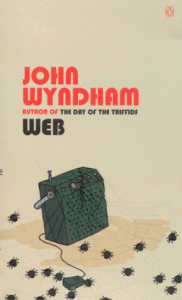
Web - John Wyndham “Hundreds of thousands of them.” Kingsley Amis in his ‘New Maps Of Hell’ praises John Wyndham’s ‘coherence and concision’ and ‘Web’ is a good example of such qualities; Wyndham does here for Spider Island what he did for walking killer plants. Rejected by his publishers and only surfacing posthumously, this slight tale of idealism gone awry is occasionally lecture-tastic and stays primly on the side of verisimilitude rather than wallowing in schlock but there remains something very readable about taking perfectly sensible people behaving perfectly sensibly and confronting them with a lurid pulp sci-fi idea. Moneybags Lord Foxfield and radical thinker Walter Tirrie assemble a group of what looks suspiciously like your average British holidaymakers and decamp to the island of Tanakuatua which has been put under a tabu by departing natives and swept by the fallout of ‘Test Zero’ but is otherwise a five star site for a new kind of social living experiment. It’s only when our redshirts arrive they spot the off-white canopy hanging over half the island and a suspicious lack of birds and insects. Don’t read this if you’re likely to spot things moving out of the corner of your eye; Branson’s Necker Island it ain’t. What follows is not a creature feature but a weirdly plausible what-if scenario which makes it all the more unnerving. ‘Web’ is short, there’s not a lot of plot and there’s zero sex or even affection between Arnold and Camilla – Wyndham was definitely more Swap Shop than Tiswas – but it still delivers the odd shudder and for those of us for whom John Wyndham was the gateway drug into grown-up science fiction affection for the man and his work goes a long way.

Defenders

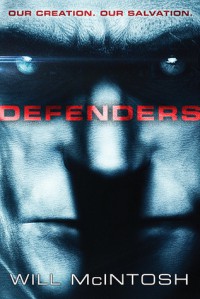
Defenders - Will McIntosh “Their minds are howling storms.” Perfect commuting material this, particularly since the alien minds behind Southern trains decided to declare war on their customers and incarcerate humble bibliophiles on their trains and platforms. ‘Defenders’ hits the ground running – literally so, for one character – the first fifty pages veer dangerously close to giving the reader whiplash, switching characters, location and time lines dizzyingly. We join proceedings at a point which took the recent ‘Independence Day: Resurgence’ almost half its run time to arrive at. Aliens have attacked. They can read our minds! But there’s a plan! Then consequences! Then an even worse nightmare! Then a surprise! Sure, it’s a cheeseburger and there are contrivances and there are 11 separate uses of ‘erupted’ (gunfire, mainly) and McIntosh’s sexual adjectives seem to extend no further than ‘banging’ but what the hell, it’s an unpretentious read with a good pulpy sci-fi slant. Wouldn’t mind seeing both the Luytens and the Defenders rendered on screen (although those three legs might have to be rethought) plus, for those who care about such things, key players in the drama are women although McIntosh seems to realise half way through if Dominique had paid more attention to the consequences of what she was doing in the first place his book would be about a third the size. Or, indeed, about the length of his original short story. Still, I can see the likes of HBO turning each part of this novel into the usual ten episode series. It’s probably not self-conciously important enough for them though, not many life lessons to be gleaned beyond how not to mint a brand new life form.

Currently reading

The Big Nowhere by James Ellroy